
Research Trip, Andros, 27th June-3rd July, 2025

Expedition leaders: Dr. Tristan Guttridge, Dr. Phil Matich, and Sorantaa Bain
Crew: Bree, Gabby, Hannah, Kaylee, Rosie, Sami, and Sonee
Introduction
Several big shark teasers with lots of laughs, snorkels, and memories made in beautiful Andros!
This Blog Was Kindly Written By Research Assistant Hannah Richey.
Day 1
Our team gathered at the Tropic Ocean Airways Airport, ready for an exciting expedition to the pristine waters of Andros. After the scenic flight over turquoise shallows and winding mangroves, we touched down on Andros and taxied over to the Andros Island Bonefish Lodge. After settling into our rooms and gearing up, we headed straight for the water. Today was all about setting the stage for our hammerhead-focused trip, and we wasted no time. As we made our way to the tagging site, we prepped the drumline gear. Bowline knots were tied tightly to fasten ropes to the buoys, while weights were attached to ensure each line would stay firmly anchored on the seafloor.


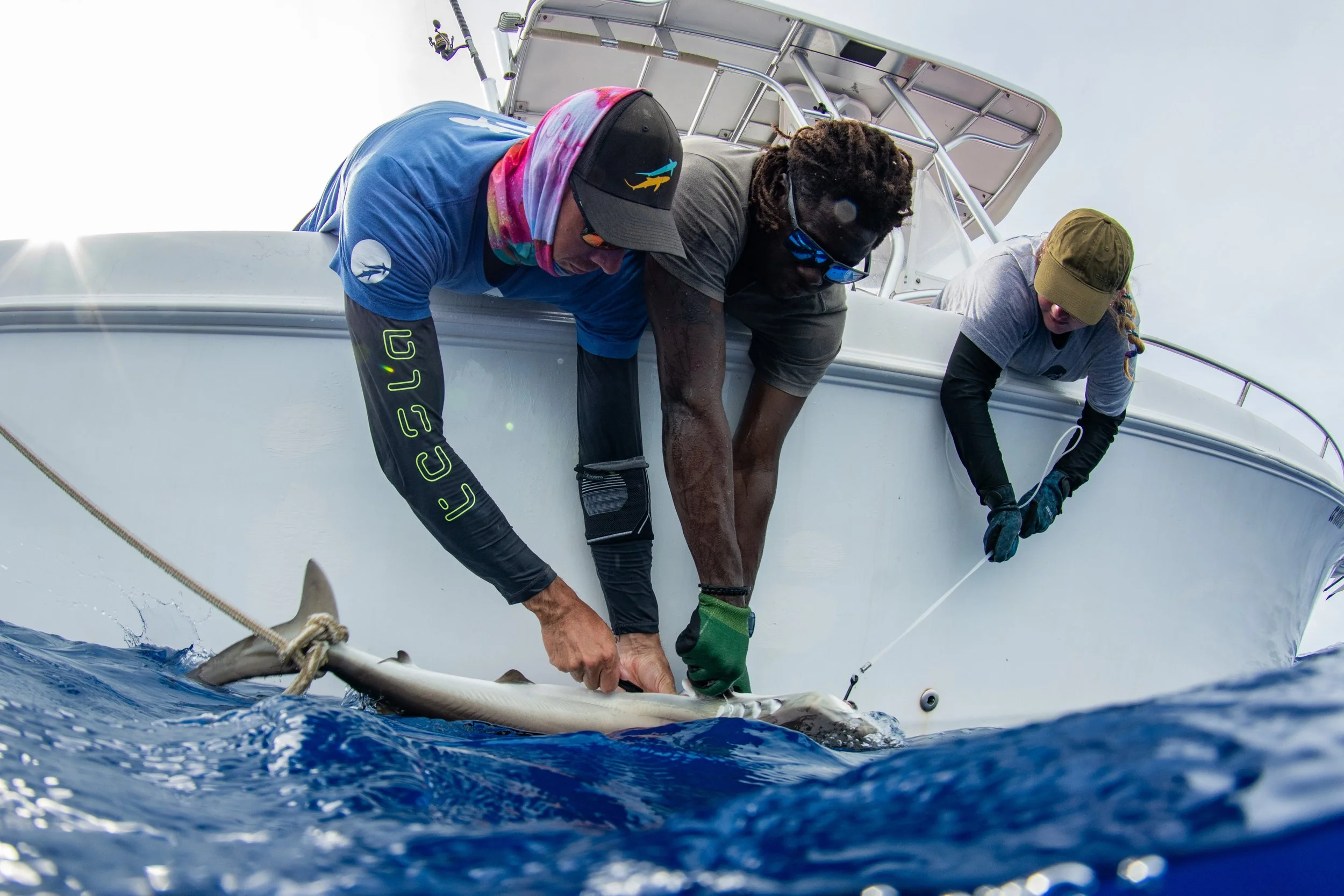
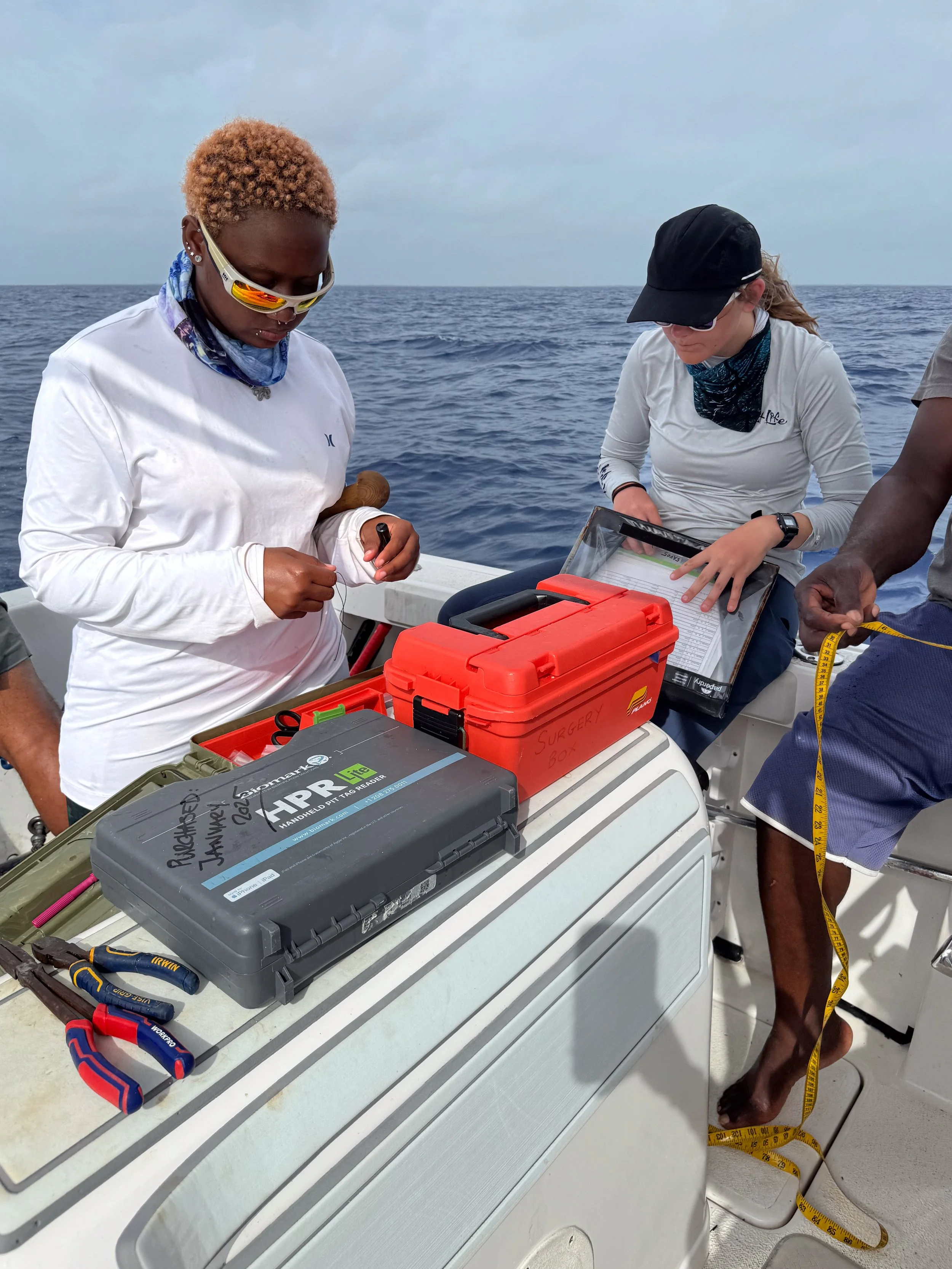
One by one, the monofilament lines were baited, and the gear was neatly organized on deck, ready for swift and efficient deployment as soon as we reached our location. Our first shark was a lively blacknose, identified by the dusky blotch on its snout and smaller size. It was safely brought aboard for tagging. Smaller sharks are only brought onboard if it is absolutely necessary. In this case, it is much safer for the shark and our team to quickly tag, measure, and release it. For blacknose sharks, both a PIT tag and an external Casey (DART) tag were used. The PIT tag, about the size of a grain of rice, is inserted below the dorsal fin and scanned for confirmation. The Casey tag is a slender yellow tag placed just under the dorsal fin for easy visual identification.


The day continued with several nurse sharks. These bottom-dwelling sharks are tagged only with PIT tags due to their habit of rubbing against the reef, which could dislodge external tags. Measurements were taken quickly and efficiently before each shark swam off strong. We also tagged a small Caribbean reef shark and another nurse before an exhilarating moment unfolded. One of the buoys jerked hard and began dragging through the water. As we approached, the team moved into position, but before we could get a proper look, the shark slipped the hook. Fortunately, our GoPro captured it all. It was a massive female great hammerhead gliding through the water! Though we didn’t tag her, the footage and encounter were thrilling.

We hauled the gear and went back home for dinner, the talk of the boat ride being about our encounter with a hammerhead on day 1! Back at the lodge, lemon sharks cruised by the waters edge as we prepped gear for the next day and reviewed the incredible footage of our hammerhead sighting.


Day 2

Another bright and early day for our team! Today began with acoustic receiver work. These devices act as underwater listening stations, detecting tagged animals that pass within 500 meters. Dr. Philip Matich, suited up in scuba gear and led the retrieval and redeployment efforts. Safety was paramount, and Sorantaa skillfully free dove alongside to ensure Dr. Matich’s safety.

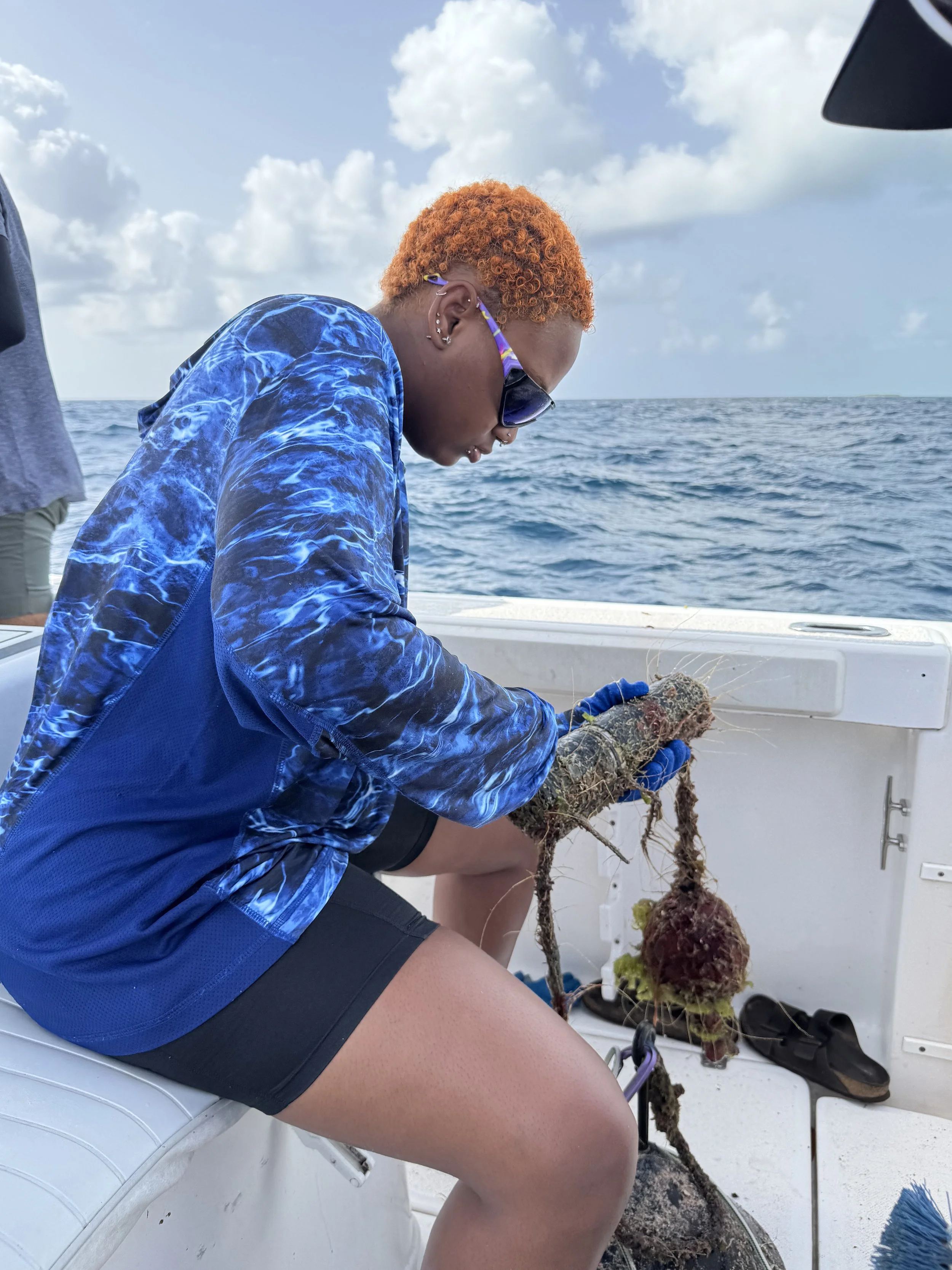


The team cleaned off the receivers as they were brought onboard and safely equipped them with new batteries. We successfully downloaded valuable data and reset the receivers. A special thank you goes to Pro Shot Case for sponsoring one of the receivers, supporting ongoing research and conservation. After completing the offshore work, we headed inshore to deploy gear and resume tagging. Sporting our Fahlo hammerhead plushie as our mascot for the day, we were excited to see what awaited us!


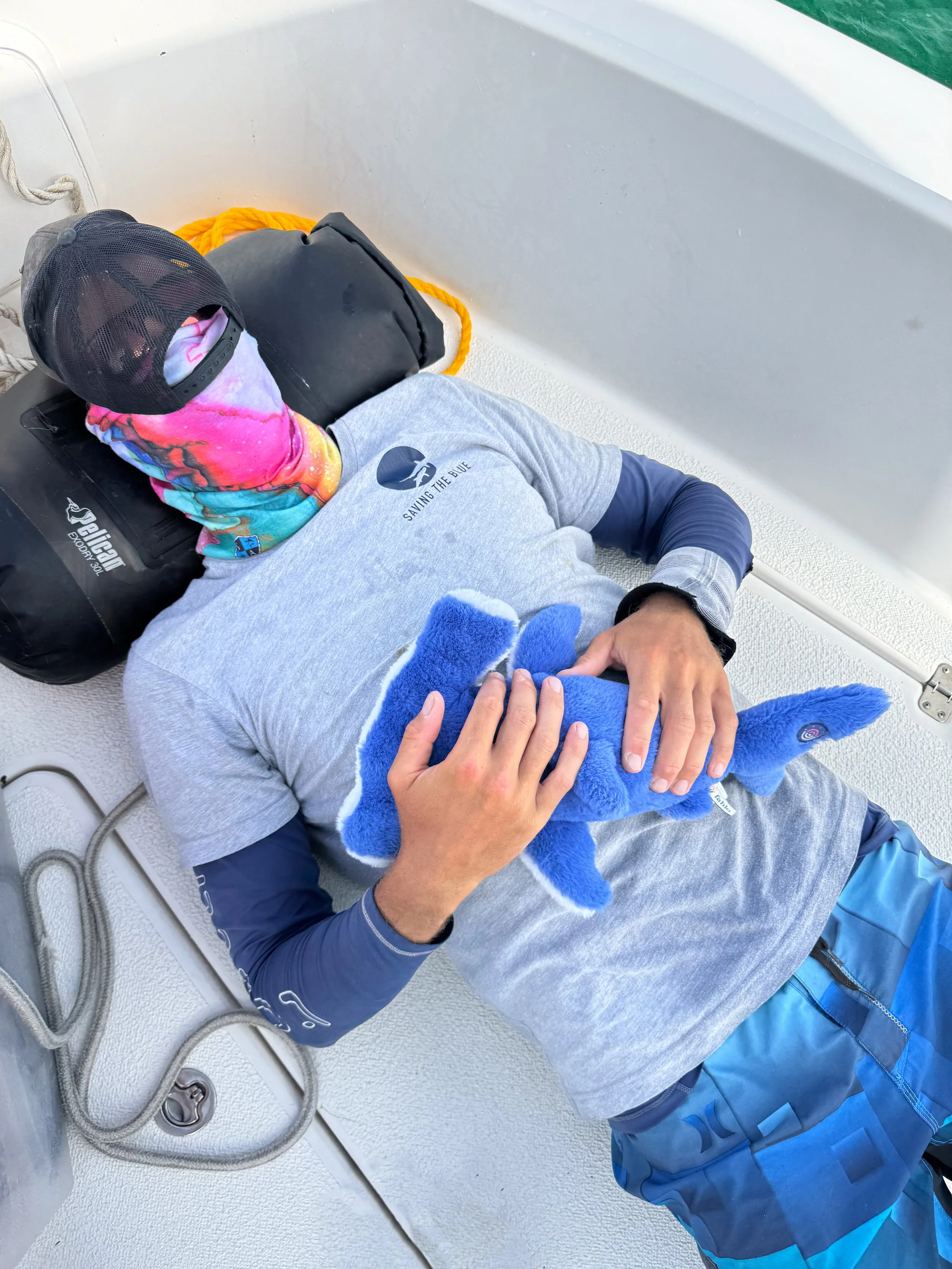
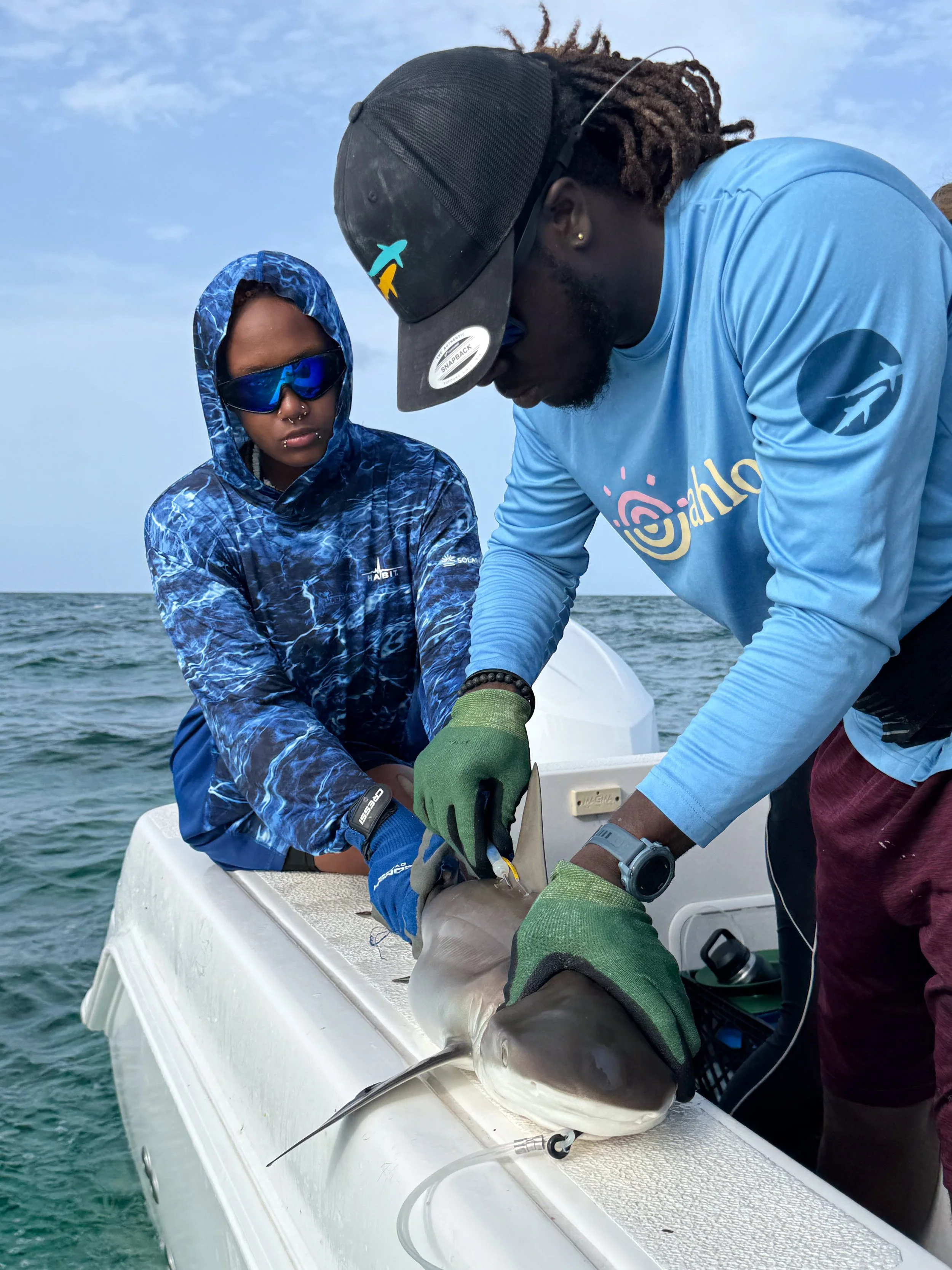
Our first shark was a nurse, followed by a small juvenile Caribbean reef, and finally, a blacktip. Each shark was tagged, measured, and safely released using the same meticulous methods. That evening, we gathered at the lodge for a special celebration.. Rosie’s birthday! A delicious cake, laughter, and stories from the day made it an unforgettable evening.

Day 3
Clouds loomed over the horizon, but we pressed on with our mission. The morning involved another round of acoustic receiver retrievals and redeployments in deeper, rougher waters. Both Dr. Philip Matich and Dr. Tristan Guttridge geared up in scuba to tackle the challenging conditions, and once again Sorantaa free dove for safety. Despite the weather, all receivers were successfully downloaded and redeployed.


We moved back inshore to resume tagging. The gear was set and we were ready for action! The first shark of the afternoon was a nurse, followed by several more nurses throughout the day. The day slowed, we continued to perform routine gear checks and kept our eyes on the buoys with anticipation. Just as we were wrapping up, we tagged a blacknose, bringing the day to a satisfying close.


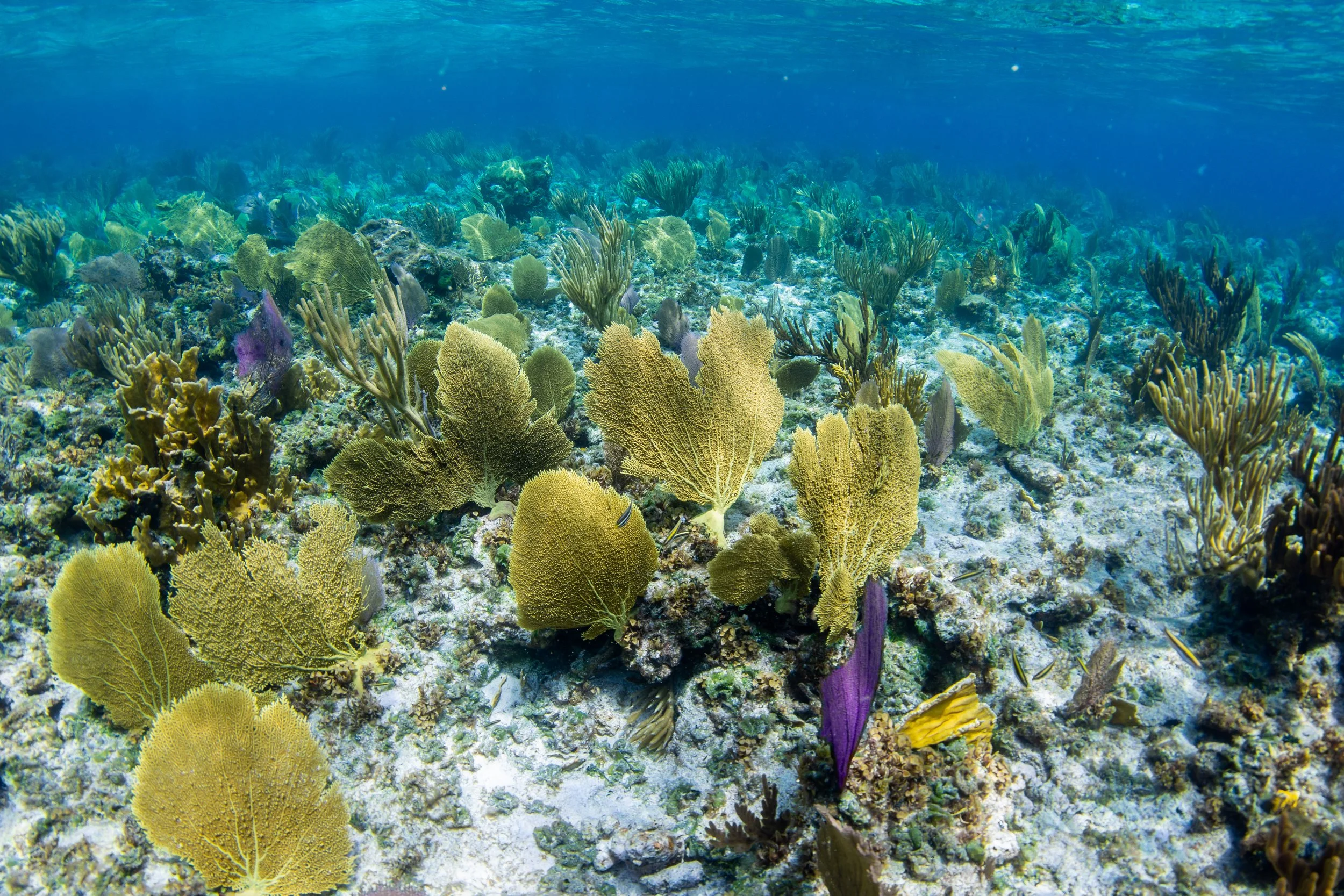
Before heading in for the day, we hopped in for a quick snorkel over the gorgeous reef.



That evening, we gathered for a lecture by Dr. Tristan Guttridge about the sharks of The Bahamas, deepening our appreciation for the diverse species we were encountering. After the lecture we tucked in for the night with high hopes for the next day.
Day 4
Rain fell steadily as we headed south to collect the final acoustic receivers. Once again, Dr. Phil and Dr. Tristan dove in with scuba gear, with Sorantaa as their safety diver.


After completing the final receiver work, we enjoyed a snorkel session among large stingrays, schools of reef fish, and vibrant coral formations. Gabby is an avid freediver and underwater photographer, during our snorkel she captured beautiful shots of all of the creatures we encountered! It was a great moment of reflection, enjoying the beautiful ecosystems and being in the water filled us with motivation,


Our afternoon brought us back to tagging. After deploying the gear, we tagged several nurse sharks and another small Caribbean reef shark. The rigs went quiet for a while, but our patience paid off when a buoy went off, revealing another nurse shark. We ended the day with a few more nurses and headed back to the lodge. Today was Gabby’s birthday, and we celebrated with another cake and a joyful evening filled with laughter and joyful discussions of our success so far.


Day 5
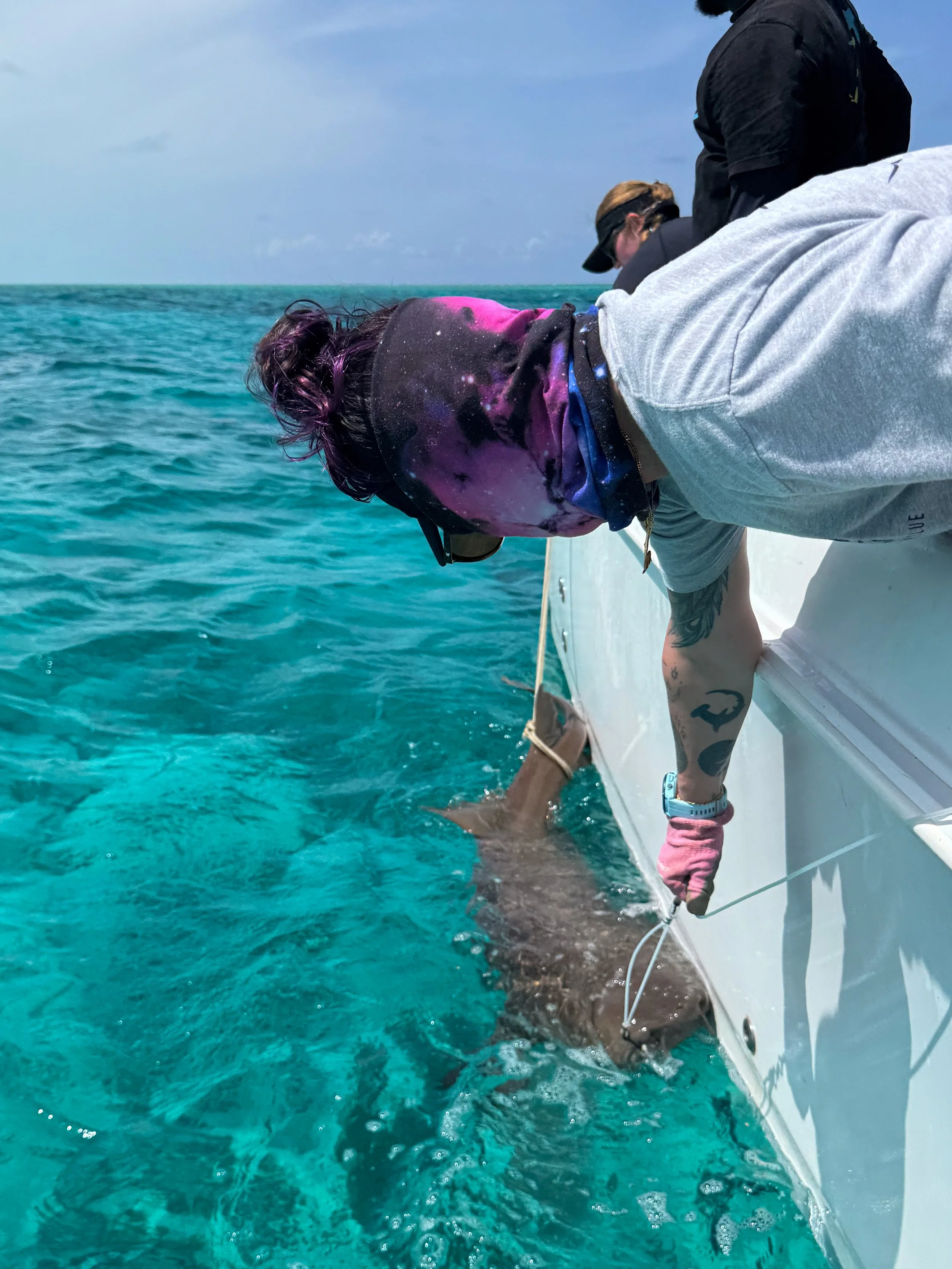
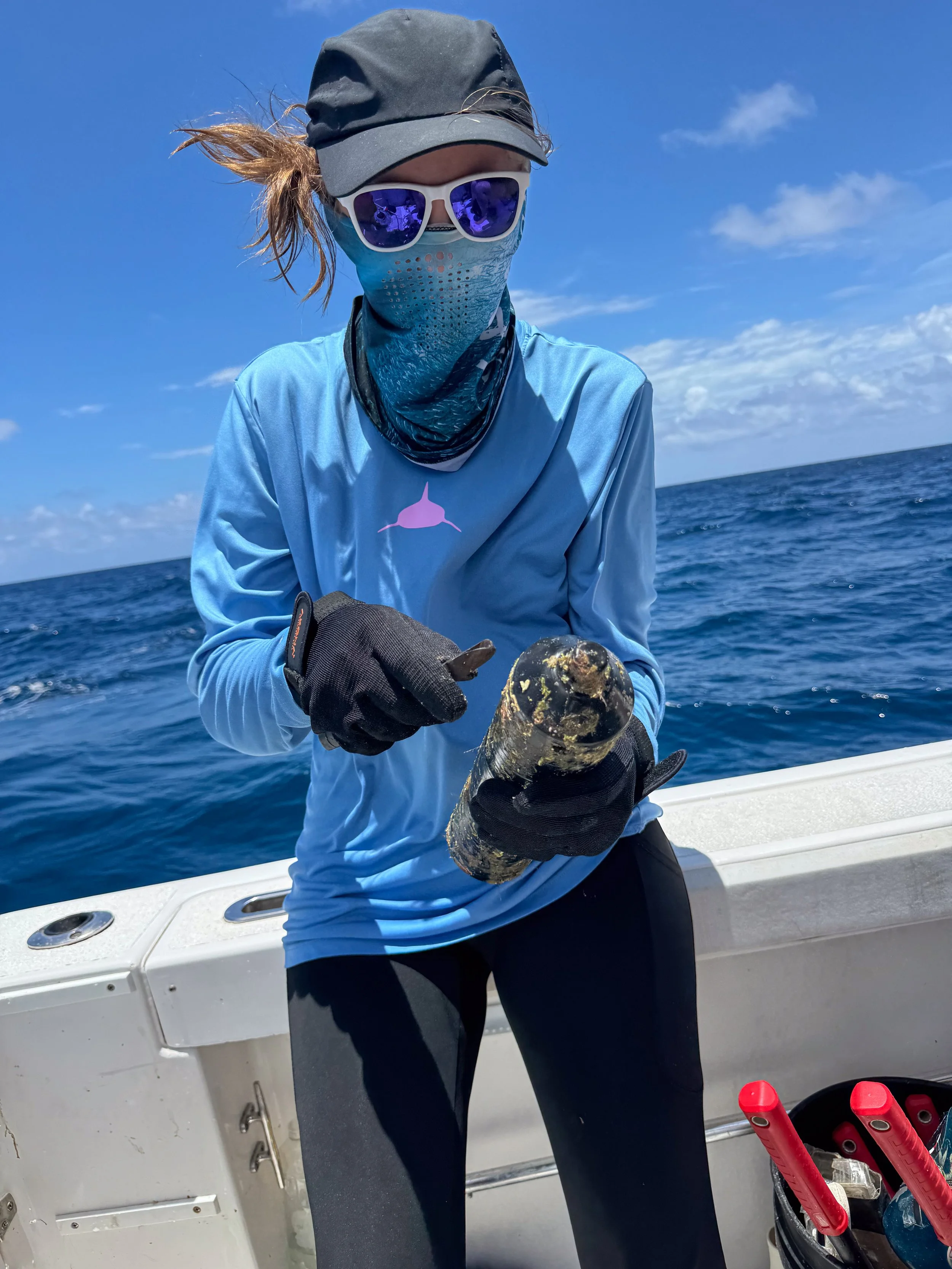
Today we ventured to the deep pelagic zone and deployed gear around the FAD (Fish Aggregating Device) Navy buoy. This buoy acts as a hotspot for marine life, especially silky sharks, drawing them in from the open ocean. We were thrilled to see several silkies and tagged multiple individuals. One silky had plastic wrapped around its body, and we were able to carefully remove it, freeing her safely. Helping that shark was a powerful reminder of why we do this work.


Inshore, we resumed tagging. Several nurse sharks were tagged and released, followed by a commotion around one buoy. As we approached, it was clear something big had been there. Though the shark got off the line, we caught a glimpse as it swam off—a massive tiger shark! Later, two large reef sharks were tagged with acoustic tags, which allow us to track their movements through our receiver network. With the gear reset, we were hopeful for more sharks, but were met with silence.


We continued to perform our routine checks, but the rigs were quiet. A few hours passed and then it was time to haul the gear and head in. With a small rainstorm heading our way, we acted quickly. As we slowly boated away, a few team members spotted a shadow in the water. We got closer, and were met with a large great hammerhead! She swam right past us in the shallow water, a breathtaking moment to witness. Although it was bittersweet, the idea of not getting a tag on was overshadowed by the excitement of yet another large great hammerhead sighting.


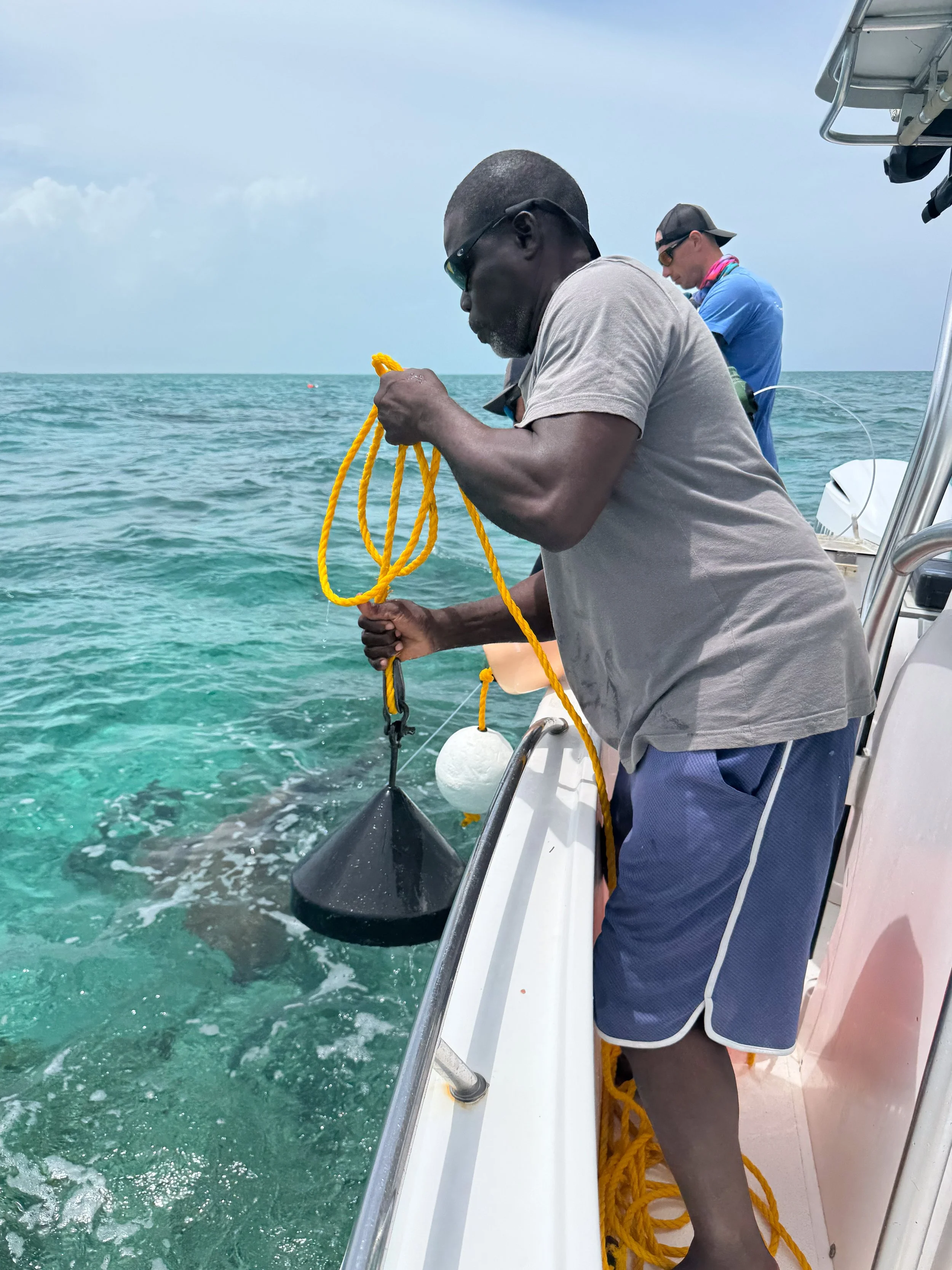

We were able to capture more footage of the shark before it disappeared into the darker waters. We headed home and prepared for dinner. The talk of the table being the hammerhead sighting and the success of the silky shark we rescued from the plastic wrap. After dinner, we headed to bed and were looking forward to our last full day on the water that awaited us.
Day 6
The sky was overcast as we loaded up the boat for Day 6, but a little cloud cover couldn’t dampen our excitement. We had high hopes for tagging and were especially eager after yesterday’s unexpected tiger shark sighting and the glimpse of a hammerhead cruising through shallow waters. As soon as we arrived at our tagging location, we began deploying drumlines.

Once the lines were in place, the wait began. It didn’t take long. The first buoy popped up with movement, and our team sprang into action. The first shark of the day was a nurse shark, which we tagged, measured, and released quickly and efficiently. Another nurse followed shortly after. Just as we were preparing to reset that buoy, another buoy shot upright in the water and began tugging sharply against the current. We knew right away that this was no nurse shark, the movement was too erratic, too powerful. As we approached, the anticipation was thick in the air. All eyes were on the water, scanning for any sign of what we had on the line. Suddenly, just below the surface, a striped silhouette began to take shape.

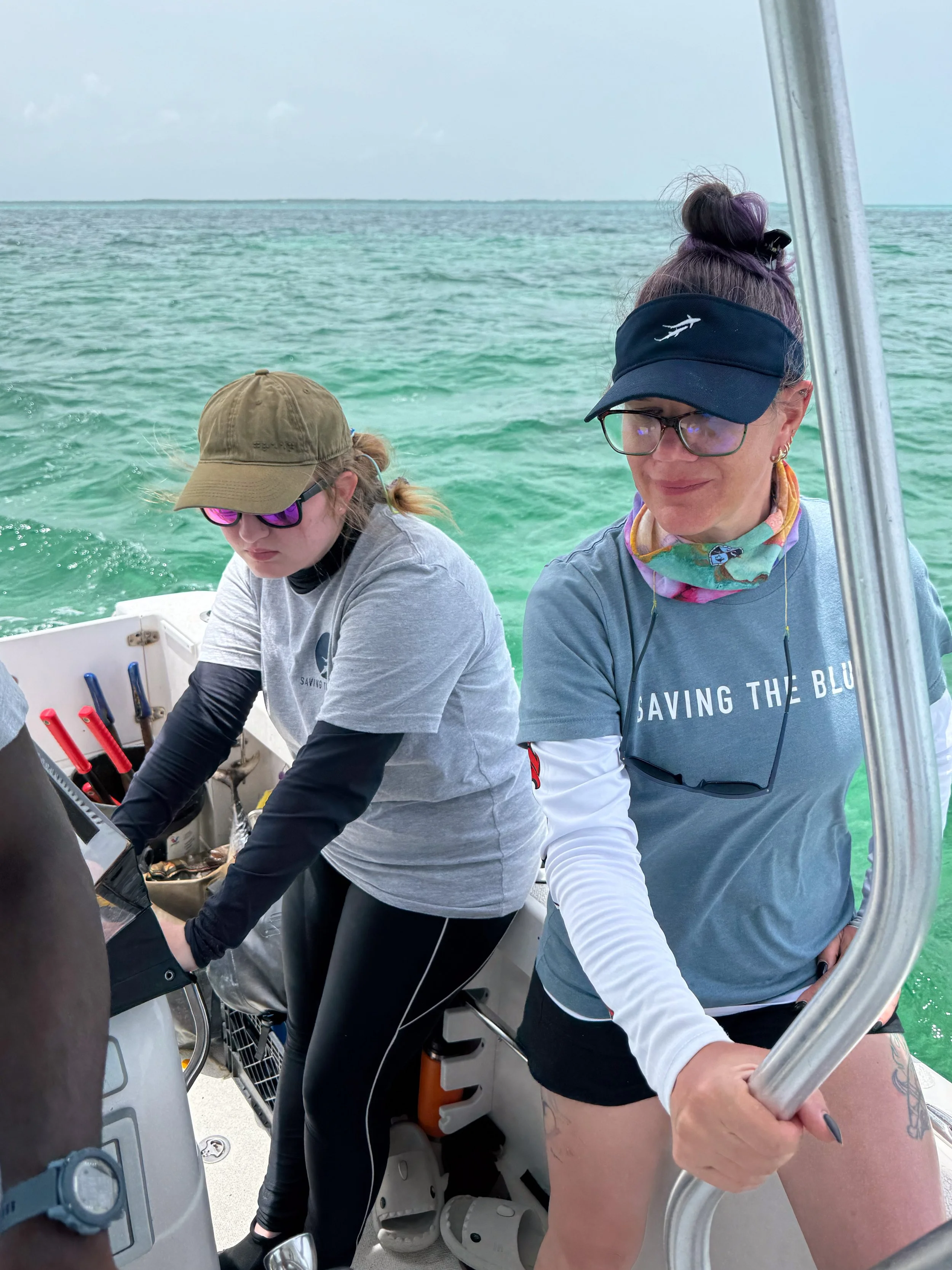

It was a juvenile tiger shark, an exciting and rare find for our trip! The team immediately went into action. The shark was secured with the tail rope while others stabilized the dorsal fin and gently controlled the head using the monofilament. Once safe at the side of the boat, we wasted no time. A PIT tag was inserted just below the dorsal fin, followed by a yellow external dart (Casey) tag to allow for easy identification in future sightings. Dr. Matich had the opportunity to apply an acoustic tag to this tiger shark, which would allow us to track its movements long-term. The acoustic tag was carefully implanted inside the shark’s body cavity, ensuring minimal stress and maximum safety for the animal. This tag will send out unique pings each time the shark passes near a receiver within a 500-meter range, providing us with valuable data on its movements, habitat use, and migration patterns. After recording all measurements and data, it was time for the release. With the GoPro positioned underwater, we captured the incredible moment of the young tiger shark swimming off strong and steady, its striped body fading into the blue.


The entire boat erupted in cheers, it was a major highlight of the trip and a reminder of why this research is so vital. The excitement lingered as we continued tagging through the afternoon. Several more nurse sharks were brought alongside, each tagged and released with care. A Caribbean reef shark also made an appearance and was worked up and safely released. Every shark, no matter the size or species, played a crucial role in our data collection efforts. After hauling and heading in, we gathered for a well-earned dinner, sharing stories and highlights of our day. The tiger shark had everyone buzzing with excitement. We also celebrated Dr. Philip Matich and Sami’s birthdays, since this would be our last group dinner before their special days. With cake, laughter, and the lemon sharks cruising just outside the dining hall windows, it was a perfect end to an unforgettable day on the water.
Day 7
Our final day began before sunrise. We headed to the Navy buoy in hopes of one last silky shark encounter. We saw several silkies circling the area and were able to successfully tag and release one before heading back to shore.
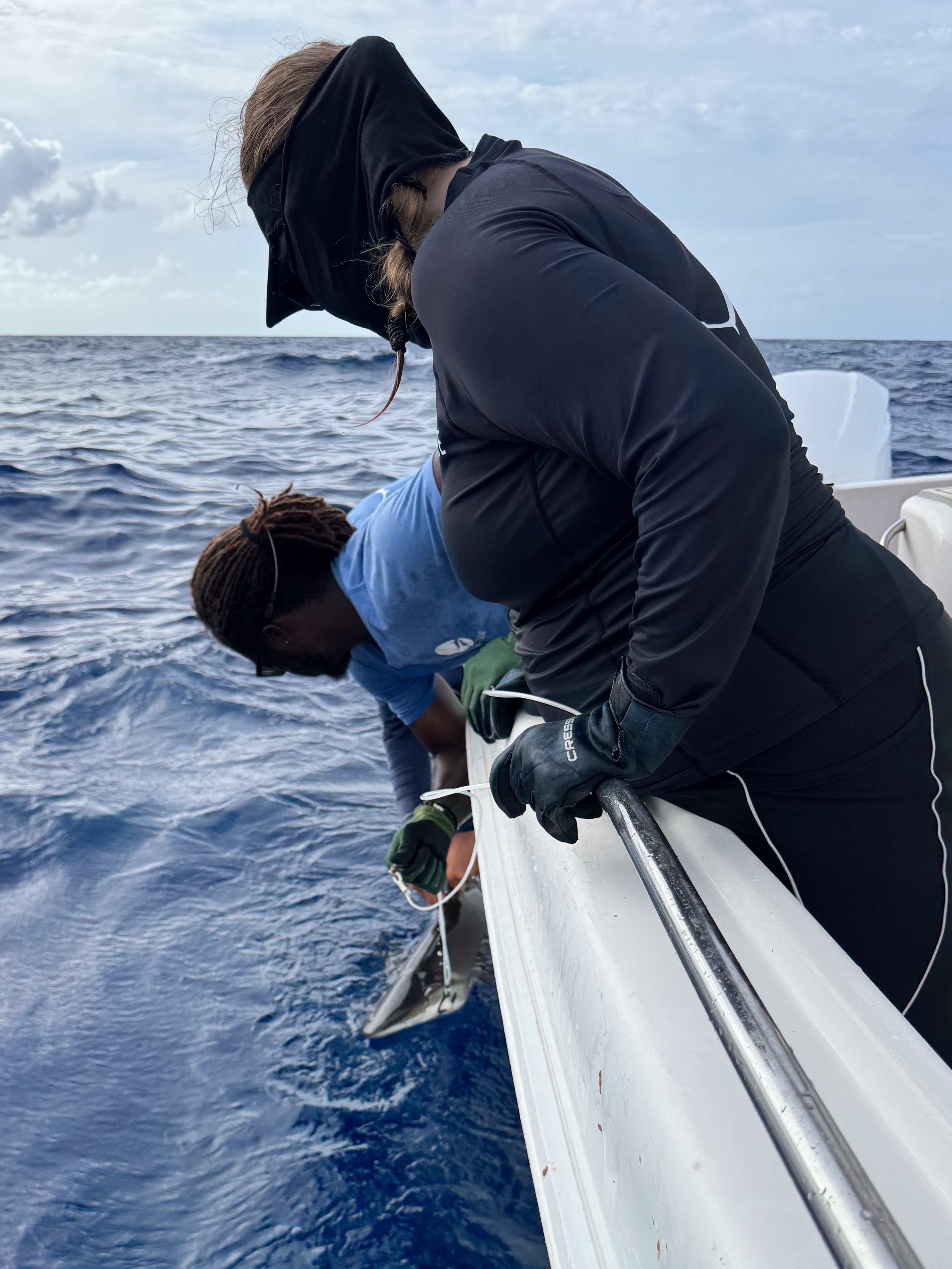


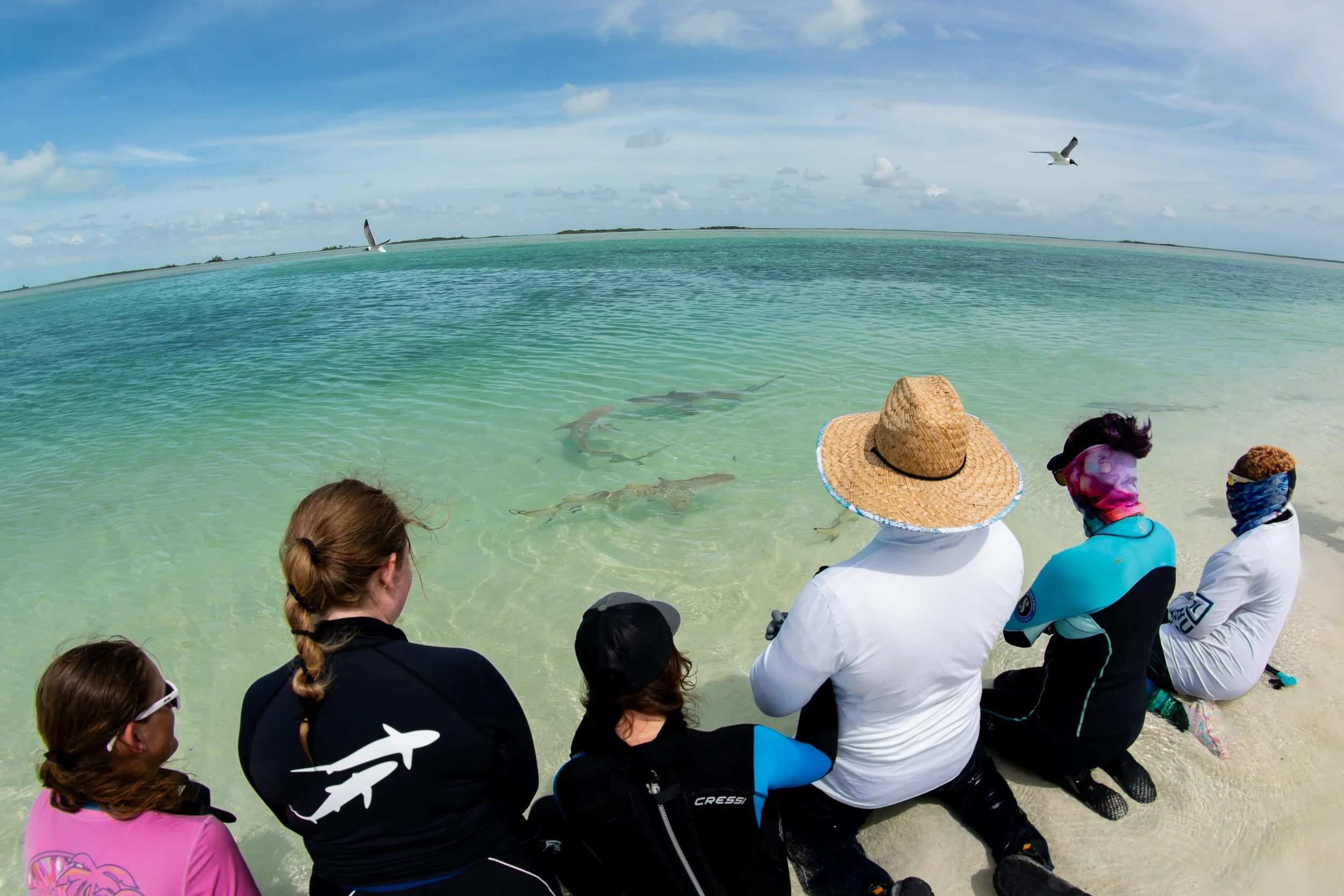
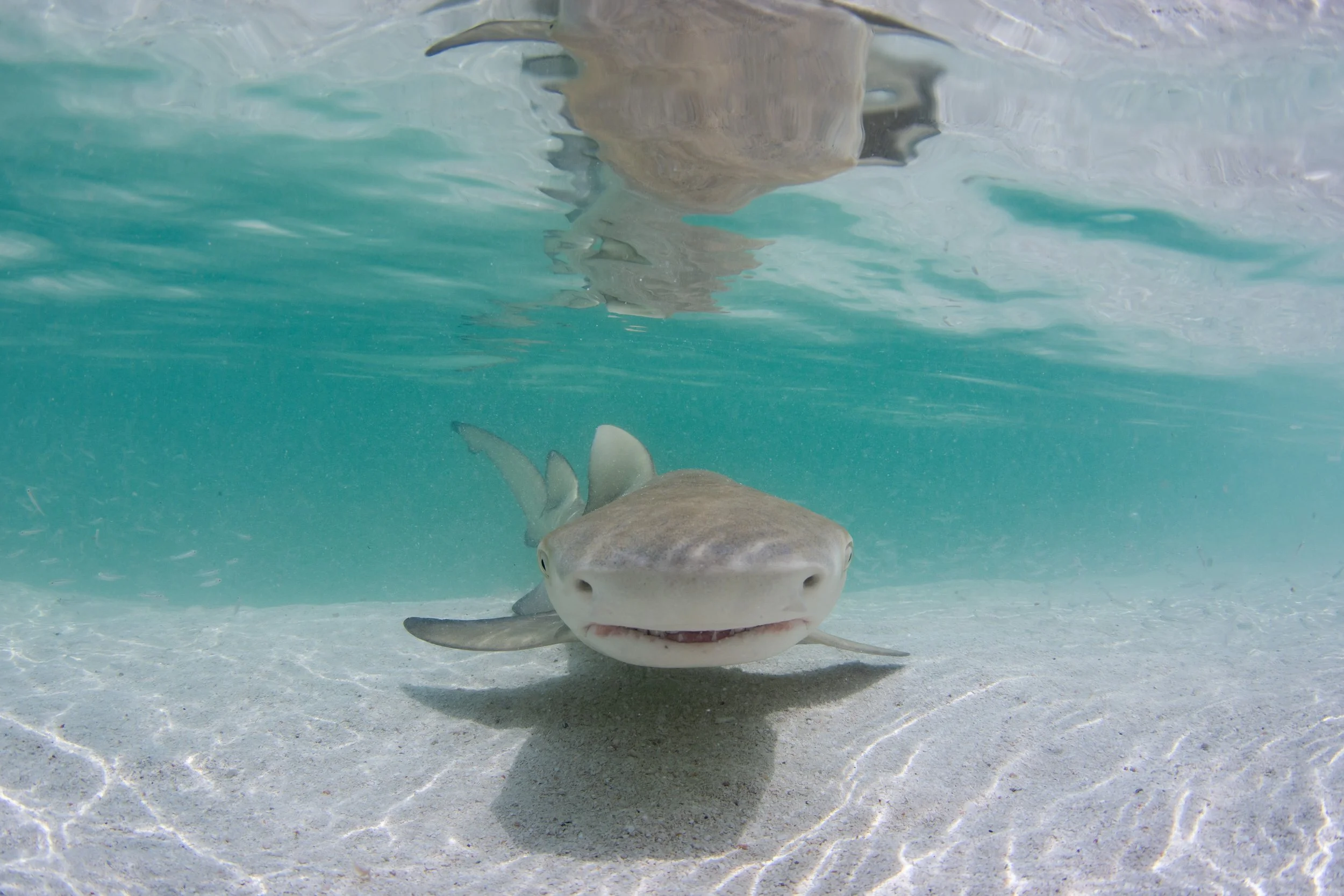
Our last stop was Isla’s Spot, a serene, shallow area named after Tristan and Annie’s daughter. Here we waded with lemon sharks, watching them glide gracefully through the shallows in front of us. It was a peaceful, grounding moment that reminded us of our purpose and the importance of protecting these incredible animals.


Back at the lodge, we packed up our gear, exchanged hugs, and prepared for our departure. As our plane lifted off from Andros, we watched the island and its surrounding waters fade into the distance. The friendships, memories, and research from this trip will stay with us, fueling our passion for conservation and the drive to return again soon.
Thank you
Thank you to our research trip leaders Dr. Tristan Guttridge, Dr. Phil Matich, and Sorantaa Bain for guiding the team through an incredibly successful week. A huge thank you to our research assistants for their passion, determination and endless enthusiasm to work hard, learn and produce results. We would also like to thank the Andros Island Bonefish Club for their hospitality, and the hardworking and ever professional Stevano for his top class boating and captaining skills.
Gratitude must also go to Gabby Lozada for her generosity in allowing us to use her images in this blog.